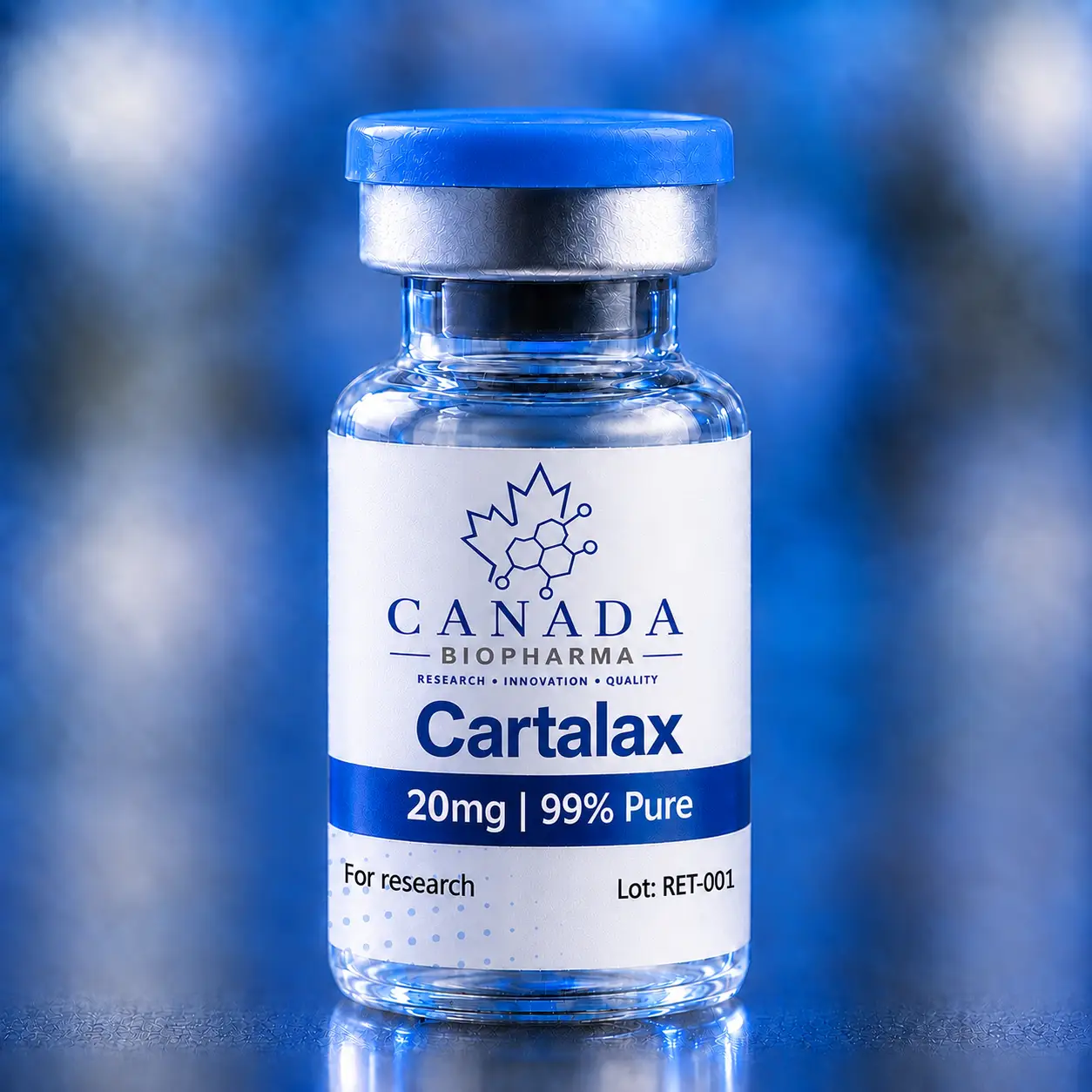
Description
Overview
Cartalax is a short synthetic peptide commonly described as Ala-Glu-Asp (AED) and associated with the Khavinson peptide-bioregulator research program. It is marketed in some sources for cartilage and connective-tissue research, although the scientific evidence remains largely preclinical.
Potential Benefits Under Research
Cartalax has been investigated for:
- Cartilage and connective-tissue support
- Chondrocyte and tissue-cell function
- Extracellular-matrix regulation
- Bone and musculoskeletal research
- Cellular and gene-expression pathways related to tissue maintenance
These effects have not been established in controlled human clinical trials, so they should not be presented as proven therapeutic benefits.
How It May Work
Research on AED peptides suggests possible effects on cellular signaling and gene-expression pathways involved in tissue maintenance. However, the precise mechanism and clinical relevance in humans remain uncertain.
Strength
Cartalax 20 mg indicates 20 mg of product per stated formulation. There is no clinically validated human dose or FDA-approved dosing regimen for Cartalax.
Safety
Human safety data are very limited. Potential concerns include:
- Unknown long-term effects
- Unknown absorption and metabolism in humans
- Possible immune reactions
- Product purity and sterility concerns, particularly with injectable research products
Regulatory Status
Cartalax does not have an FDA-approved medical indication or established FDA-approved dose. Current evidence is primarily laboratory and animal research rather than established clinical evidence in humans.
Conclusion
Cartalax 20 mg is an investigational peptide associated with cartilage and connective-tissue research. While it has attracted interest for musculoskeletal and tissue-maintenance applications, human efficacy and safety have not been established.


Reviews
There are no reviews yet.